
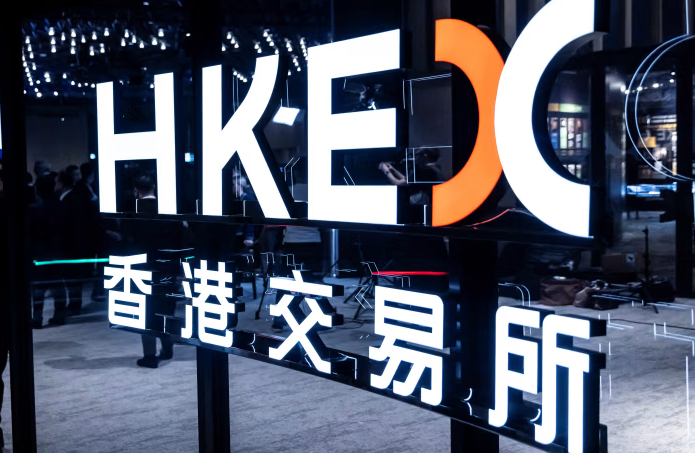
China AI IPO Hong Kong trends are accelerating in early 2026 as Chinese artificial intelligence startups increasingly choose Hong Kong for public listings. The strong debut of AI chipmaker Biren Technology highlights how Hong Kong is emerging as a preferred IPO destination for China’s fast-growing AI and semiconductor companies amid shifting global market dynamics.
Shares of the Chinese AI chip designer jumped 76% on their first day of trading, marking the first IPO listing in Hong Kong this year and setting the tone for what analysts expect to be an active year for AI and semiconductor offerings.
Biren IPO: Strong Market Debut Signals Investor Confidence
Biren’s shares opened at HK$35.70, surged to an intraday high of HK$42.88, and closed at HK$34.46, well above the IPO offer price of HK$19.60.
By comparison, Hong Kong’s benchmark Hang Seng Index rose just 2.8% on the day.
The stock ranked among the top three most actively traded shares on the exchange, with 150.7 million shares changing hands, valued at approximately HK$5.52 billion (US$707.7 million).
Oversubscription Highlights Appetite for AI Listings
Biren raised HK$5.58 billion by selling 284.8 million shares, priced at the top of the marketed range. Demand was exceptionally strong:
- Institutional tranche: nearly 26× oversubscribed
- Retail tranche: oversubscribed by over 2,300×
At listing, the company’s market capitalisation stood at HK$46.9 billion, underscoring robust confidence in China’s domestic AI chip ambitions.
Who Is Biren Technology?
Founded in 2019, Biren develops general-purpose GPUs and intelligent computing systems designed for artificial intelligence and high-performance computing workloads.
The company gained widespread attention in 2022 with its BR100 chip, positioned as a domestic alternative to advanced AI processors from U.S. chip leader Nvidia.
Leadership & Background
- Co-founder Zhang Wen: former president at SenseTime
- Co-founder Jiao Guofang: former executive at Qualcomm and Huawei
Biren stated it will allocate most IPO proceeds to research, development, and commercialisation.
Geopolitics, Policy, and China’s Tech Self-Sufficiency Push
The IPO prospectus highlighted risks from U.S. export controls, after Biren was added to Washington’s Entity List in October 2023, restricting access to certain technologies.
However, the company also pointed to strong policy support from China’s drive toward technological self-sufficiency, especially in AI chips and advanced computing.
Cornerstone investors in the IPO included 3W Fund, Qiming Venture Partners, and Ping An Life Insurance.
Hong Kong’s IPO Market Rebound Fuels AI Boom
Biren’s successful debut follows a record rebound year for Hong Kong’s equity markets:
- US$36.5 billion raised
- 114 new listings in 2025
- Highest IPO proceeds since 2021
According to exchange filings, seven companies submitted listing applications on January 1, signaling strong early-year momentum.
Among notable pipeline developments:
- AI startups Zhipu AI and Iluvatar CoreX are scheduled to debut soon
- Baidu confirmed its AI chip unit Kunlunxin has filed for a Hong Kong IPO
- Investment banks including Morgan Stanley are coordinating upcoming listings
Is Asia Replacing NASDAQ for AI IPOs?
Market observers say Hong Kong’s AI IPO surge reflects structural shifts, not a short-term trend.
According to Winston Ma, an adjunct professor at New York University School of Law and former executive at China’s sovereign wealth fund China Investment Corporation, Chinese AI startups are listing faster due to:
- Supportive domestic policies
- Clear enterprise-driven revenue models
- Valuations better suited to current IPO conditions
“AI is fundamentally transformative, driving keen investor appetite,” said Li He, partner at law firm Davis Polk.
2026 Could Be a Defining Year for AI IPOs
Analysts widely expect AI and semiconductor IPOs to dominate Hong Kong’s deal flow in 2026, positioning the city as a parallel listing hub to NASDAQ rather than a replacement.
Hong Kong is rapidly becoming the preferred launchpad for Asia-first AI and chip startups, especially those navigating geopolitical constraints while targeting large enterprise markets.